Famous Pinhole Photographers, Landmark Projects and the Rise of Solargraphy
Famous pinhole photographers from George Davison to Abelardo Morell, the Pinhole Resource, giant camera projects and the solargraphy pinhole movement.
Pinholista editorial team ·
Few photographers make their names with pinhole alone. The technique is slow, soft and unpredictable, and most of the people who have pushed it furthest also work with lenses, darkrooms or sculpture. Yet a short list of names comes up again and again whenever pinhole photography is discussed, and their work shows how wide the field is: Victorian art photography, room-sized cameras, a camera made from a launderette, beer cans left on lamp posts for years.
What follows is a guide to the famous pinhole photographers and projects that are well documented in books, museum collections and the photographic press. It is far from complete, and it leaves out thousands of people who make excellent pinhole pictures without wanting to be well known.
Where it starts: Brewster and Davison
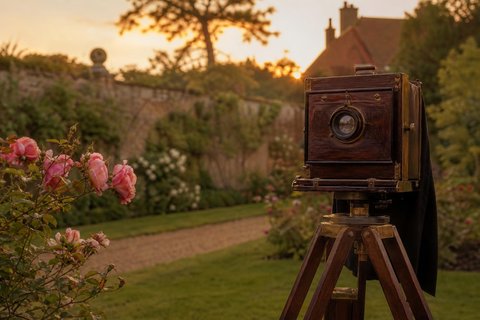
The Scottish physicist Sir David Brewster made some of the first pinhole photographs in the 1850s and gave the method its name. For him it was a scientific curiosity, a camera without a lens, and he wrote about it as such.
The first pinhole picture to be admired as art came some forty years later. George Davison, a British photographer close to the pictorialist movement, showed a soft, atmospheric pinhole landscape in 1890, a view of a farmstead later known as The Onion Field. Critics argued over it for years. Its blur was exactly what the pictorialists wanted and what the sharp-focus camp disliked, and it set the terms in which pinhole photography is still discussed: atmosphere against detail.
Milestones
From a curiosity to a world day
Dates that pinhole photographers return to.
AI
1850sDavid BrewsterEarly pinhole photographs; the word pin-hole enters print.
AI
1890George DavisonA pinhole landscape shown as art sparks a long debate on sharpness.
AI
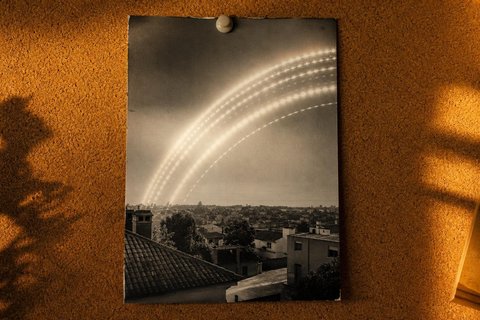
2000Solaris projectSolargraphy begins in Poland: months of sun on a sheet of paper.
AI
2001Worldwide Pinhole Photography DayThe first edition, on the last Sunday of April.
AI
2006The Great PictureAn aircraft hangar in California becomes a camera for one huge print.
The modern revival
Pinhole photography came back in the 1970s and 1980s, helped by artists who used its softness on purpose. Ruth Thorne-Thomsen became known for small, dreamlike pinhole prints in which miniature figures and cut-outs, set close to the camera, loom over real landscapes behind them. The infinite depth of field of a pinhole makes the toy and the horizon equally sharp, and the scale of everything becomes uncertain.
The revival needed a meeting place, and it found one in New Mexico. Eric Renner and Nancy Spencer founded the Pinhole Resource, which published the Pinhole Journal and built up a large collection of pinhole work from many countries. Renner’s book Pinhole Photography: Rediscovering a Historic Technique, first published in the mid-1990s, became the standard introduction to the subject and is still the book most often recommended to beginners who want history alongside practice.
The infinite depth of field of a pinhole makes the toy and the horizon equally sharp.
Rooms, hangars and washing machines
A pinhole camera can be any size, and some of the best-known pinhole work comes from making the camera absurdly large or unexpectedly ordinary.
Abelardo Morell, born in Havana in 1948 and working in the United States, turned whole rooms into cameras obscura from the early 1990s. He blacked out the windows, opened a small aperture and photographed the upside-down street or landscape spread across beds, bookshelves and walls. Later he built a tent camera with a periscope that projects the ground around it onto the sand or grass at its feet. Not every picture uses a bare hole, but the principle is the pinhole principle, at the scale of architecture.
The British artist Steven Pippin went the other way. He converted the washing machines of a launderette into cameras and used them to make a sequence of pictures in the manner of Eadweard Muybridge’s motion studies, a piece of work that is at once a joke and a serious question about what counts as a camera.
Well-documented names in pinhole photography
Name
Base
Known for
Sir David Brewster
Scotland
Early pinhole photographs, the term pin-hole
George Davison
England
Pinhole landscape shown as art in 1890
Ruth Thorne-Thomsen
United States
Small pinhole prints mixing miniatures and real landscapes
Eric Renner and Nancy Spencer
New Mexico, USA
Pinhole Resource, Pinhole Journal, the standard history
Abelardo Morell
United States
Rooms turned into cameras obscura, the tent camera
Steven Pippin
United Kingdom
Cameras from everyday machines, including washing machines
Justin Quinnell
United Kingdom
The mouth-held smiley pinhole camera, long solargraphs
The largest pinhole picture yet made came from a group of six photographers in California. For The Great Picture in 2006 they sealed a disused jet hangar at the former El Toro Marine Corps Air Station, hung a giant sheet of fabric coated with photographic emulsion inside and let a small hole project the control tower and the hills behind it. The finished print measures more than 30 metres across and was recognised as the world’s largest photograph.
Justin Quinnell, a British photographer and teacher, works at the opposite end of the scale. His best-known camera is a tiny film holder clamped in the mouth, the smiley pinhole, which looks out past the teeth and lips at the world. The result is funny and slightly unsettling, and it has made his name familiar to many people who have never held a pinhole camera.
Solargraphy pinhole work
Solargraphy is the most popular new form of pinhole photography of the last quarter-century. Its idea is simple: a pinhole camera made from a can or a plastic tube, loaded with ordinary black-and-white photo paper and fixed outdoors for months. The sun burns a bright line across the paper each day, higher in summer and lower in winter, while the landscape slowly prints itself underneath. The paper is never developed. It is scanned straight out of the can, and the scanner turns the faint, bleached image into deep blues, golds and pinks.
The Solaris project began in Poland in 2000, with Sławomir Decyk, Paweł Kula and Diego López Calvín among its founders, and it gave the method its name. From there it spread through workshops and online groups. The Finnish artist Tarja Trygg ran a long international project collecting solar images from many latitudes, which showed how the curve of the sun’s path flattens towards the poles.
2000The Solaris project starts solargraphy in Poland
6 monthsClassic solargraph, from one solstice to the next
8 yearsThe forgotten Bayfordbury can found in 2020
The most famous single solargraph is an accident. In 2012 a student at the University of Hertfordshire, Regina Valkenborgh, taped a beer can loaded with photo paper to a telescope at the Bayfordbury observatory and forgot about it. It was found in 2020, after about eight years of exposure, with hundreds of overlapping sun trails arcing over the observatory buildings. It is widely described as the longest exposure ever made.
What these names have in common
Read the list again and a pattern appears. Almost none of these people treated the pinhole as a cheap lens. They used what only a hole can do: infinite depth of field, cameras of any shape and size, exposures of months or years. The pinhole was the idea, not the limitation. That is a useful thought for anyone starting out with a panoramic drum camera or a matchbox, and a good reason to look at the pictures in the gallery for what they do rather than what they lack.
Today’s pinhole photography is spread across festivals, workshops and Worldwide Pinhole Photography Day, which still runs on the last Sunday of April and is documented at pinholeday.org. A look back at one of those days shows how many unknown photographers produce work that would sit comfortably beside the famous names, which is perhaps the oddest thing about this corner of photography. The best-known pictures are often made by people who chose to stay unknown.
FAQ
Frequently Asked Questions
Who made the first pinhole photographs?
The Scottish scientist Sir David Brewster made some of the earliest pinhole photographs in the 1850s and is usually credited with coining the word pin-hole. The principle behind them, the camera obscura, had been described many centuries before, by the Chinese philosopher Mozi and later by Ibn al-Haytham, but photographs needed light-sensitive materials that only appeared in the 19th century.
What is the longest pinhole exposure on record?
A widely reported solargraph found in 2020 at the University of Hertfordshire's observatory in Bayfordbury had been exposing for about eight years. A beer can lined with photographic paper was placed there in 2012 by a student, Regina Valkenborgh, and forgotten. The paper recorded the sun crossing the sky through eight years of seasons.
What is solargraphy?
Solargraphy is very long pinhole photography, usually lasting from one solstice to the next, about six months. A can or tube with a pinhole and a sheet of ordinary photographic paper is fixed outdoors, and the sun burns its daily path across the paper as a bright arc. The paper is not developed but scanned straight away, which turns the faint image into a colourful picture.
Is the camera obscura the same as a pinhole camera?
They share the same principle. A camera obscura is a darkened room or box where a small opening projects an upside-down picture of the outside onto a wall or screen. A pinhole camera is a camera obscura with light-sensitive material where the screen would be. Many modern camera obscura artworks use a lens instead of a bare hole to get a brighter image.
Where can pinhole photography be seen in public?
Pinhole work turns up in photography festivals, university galleries and alternative-process shows, and Worldwide Pinhole Photography Day, held on the last Sunday of April since 2001, gathers images from around the world in an online gallery. Major museum collections also hold pinhole prints, often catalogued under the photographer's name rather than the technique.
 1850sDavid BrewsterEarly pinhole photographs; the word pin-hole enters print.
 1890George DavisonA pinhole landscape shown as art sparks a long debate on sharpness.
 2000Solaris projectSolargraphy begins in Poland: months of sun on a sheet of paper.
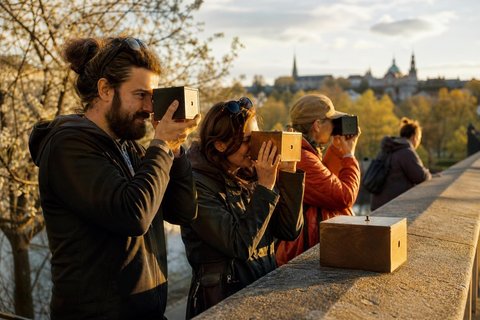 2001Worldwide Pinhole Photography DayThe first edition, on the last Sunday of April.
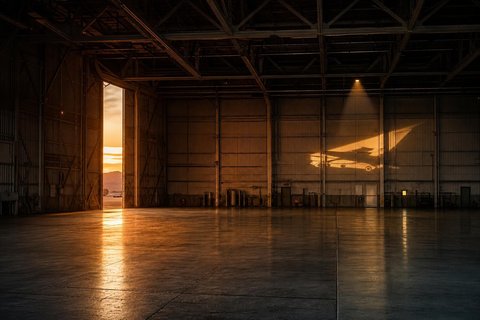 2006The Great PictureAn aircraft hangar in California becomes a camera for one huge print.