Places
Berlin Analogue Photography: A Pinhole Walk With Photo Booths and Galleries
Berlin for analogue and pinhole photographers: Photoautomat booths, the Spree and Oberbaum Bridge, Tempelhofer Feld, photo galleries and winter light.
Berlin is one of the friendliest cities in Europe for anyone who still shoots on film. Analogue photography never quite went away here, and the city’s mix of wide streets, empty lots, concrete, water and old brick suits the slow, soft look of a pinhole camera. A long exposure on a Berlin street corner tends to remove the traffic and the people and leave the architecture, which in this city often tells its history more plainly than any plaque.
This page gathers a few durable reasons to bring a camera: the old photo booths, a handful of locations along the Spree and on the former airfield at Tempelhof, the galleries that show photography, and some notes on the city’s light through the year. Practical details such as prices, labs and opening hours change, so they are kept general.
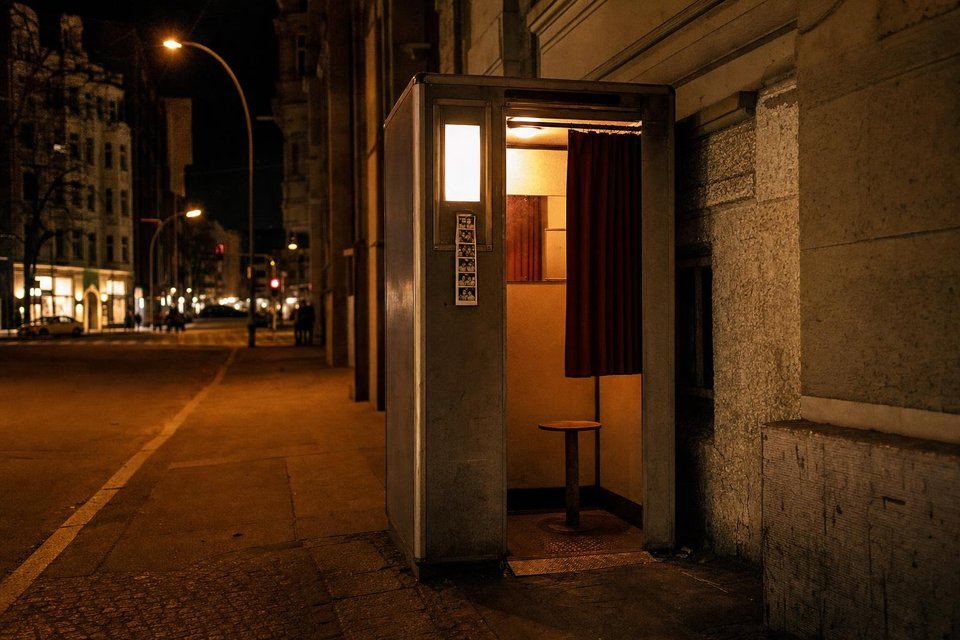
The Photoautomat booths
The most famous analogue experience in Berlin costs a couple of coins. Scattered across inner districts such as Friedrichshain, Kreuzberg, Mitte and Prenzlauer Berg stand restored chemical photo booths, usually called by the brand name Photoautomat. Step in, draw the curtain, feed the slot and the machine takes four black and white frames, then develops and dries them internally. A few minutes later a narrow strip of real silver prints drops out of the side.
The appeal is the same as a pinhole camera’s: a slow, physical process with a result that cannot be previewed. The pictures have the slight unevenness and deep blacks of real chemistry, and every strip is unique. For many visitors a Photoautomat strip is the first analogue picture they have held in years, and in Berlin analogue photography often starts exactly there, in a booth on a street corner late at night with friends squeezed onto the stool.
- Find a booth. They tend to sit near bars, cafés and U-Bahn stations in the inner east; walking is the easiest way to spot one.
- Carry coins. The machines are old and rarely take cards.
- Hold the pose. There is a short pause between each of the four frames.
- Wait outside. Developing takes a few minutes, and the strip comes out damp, so let it dry before putting it away.
Pinhole walks along the Spree
The river is the backbone of a pinhole walk in Berlin. Water slows everything down in a long exposure, and the Spree is lined with subjects that suit a wide, soft view. The Oberbaum Bridge, a double-decked brick bridge with towers and the U-Bahn running across its upper level, links Friedrichshain and Kreuzberg and is at its best from the river bank at dusk, when a long exposure turns the passing trains into streaks of light.
Close by, the East Side Gallery is the longest surviving stretch of the Berlin Wall, a run of painted concrete beside the river. It is crowded in the day, which makes it a natural place for an exposure long enough to wash the crowds into a faint haze. Further west, Museum Island and the cathedral sit on the water in the centre, and the TV tower on Alexanderplatz rises above everything, an easy landmark to frame from almost anywhere.
| Place | Why it works | When |
|---|---|---|
| Oberbaum Bridge | Brick arches, towers, trains crossing above the river | Dusk, long exposures for light trails |
| East Side Gallery | Painted Wall sections; crowds vanish in long exposures | Early morning or busy afternoons |
| Tempelhofer Feld | Open runways, huge sky, kites and cyclists as blur | Late afternoon, windy days |
| Berlin Wall Memorial, Bernauer Strasse | Preserved border strip and watchtower | Overcast days |
| Museum Island | Classical facades over the Spree | Evening, with reflections |
Tempelhofer Feld
The former Tempelhof airport closed to flights in 2008, and in 2010 its airfield opened to the public as a park. It is one of the strangest open spaces in any European city: two long runways, taxiways and a perimeter road under a vast sky, all in the middle of the city. People cycle, skate, fly kites and picnic on the tarmac.
For a pinhole camera this is a place for horizons. Put the camera low on the runway and the lines run away into the distance, while anything moving becomes a soft ghost. On a breezy afternoon the kites smear across the sky during a few seconds of exposure. The vast curved terminal building on the north-western edge, a monumental piece of 1930s architecture, is best taken from the field side, where its full length fits a wide pinhole view.
A long exposure on a Berlin street corner removes the traffic and leaves the architecture.
Galleries and exhibitions
Berlin has a strong photography scene, and some of its venues have shown pinhole work over the years. Fotogalerie Friedrichshain, a public gallery for photography on Helsingforser Platz with roots in the 1980s, staged an exhibition of mostly pinhole work by four photographers from Germany, France and Italy in early 2016, accompanied by pinhole workshops for different age groups. A book of pinhole images called Obscura was launched with an exhibition in the city in 2014. Neither is still on show, but both say something about how much the medium has been at home here.
For permanent collections and regular shows, C/O Berlin at Amerika Haus and the Museum für Fotografie, home of the Helmut Newton Foundation, both sit near Zoologischer Garten station. Smaller galleries in the eastern districts come and go, and posters on lamp posts are often the best guide to what is on.
Light through the year
Berlin sits at about 52.5 degrees north, which makes for big seasonal swings in light. Winter days are short, grey and often damp, while midsummer evenings stretch until well after ten at night.
Winter suits the city’s concrete and water better than its tourist brochures suggest. A grey afternoon at the East Side Gallery or along the canal in Kreuzberg gives exposures of many seconds at pinhole apertures, and the flat light shows texture without harsh shadows. The pinhole camera guide has the numbers for working out those times.
Berlin has also hosted pinhole meetings and photo walks over the years, much like the WPPD group day in Amsterdam, and the makers section covers the cameras and processes such photographers bring to a city and far beyond. For a smaller, quieter city to compare it with, the Norwich walk is about as far from Tempelhof as a pinhole walk can get. A last practical tip: photo booth strips curl and scratch easily in a pocket, so a stiff envelope or a notebook to press them in keeps them flat and clean until home.
Frequently Asked Questions
What is a Photoautomat in Berlin?
It is an old chemical photo booth, restored and set up on a street corner, that takes four black and white pictures and develops them inside the machine in a few minutes. The booths take coins and produce a narrow strip of real silver gelatin prints. They are spread across several inner districts, and their exact locations change from time to time, so it pays to keep an eye out while walking.
Can pinhole cameras be used on Berlin public transport and in parks?
Photography in public parks and streets is generally fine for personal use, and a small pinhole camera draws little attention. Tripods in busy places such as stations or narrow pavements can be a nuisance, so a beanbag or a ledge is often the better choice. Private sites, museums and some memorials have their own rules, which are usually posted at the entrance.
What is the best season for pinhole photography in Berlin?
Late spring and early autumn are the easiest, with long but not extreme days and soft light. Winter days are short and often grey, which suits moody long exposures of concrete and water but leaves little working time. Midsummer brings very long evenings and late sunsets over the Spree, ideal for slow pictures of bridges and riverbanks after the crowds thin out.
Is film processing available in Berlin?
Berlin has kept more analogue culture than most European capitals, and several professional labs and smaller shops in the city still develop colour and black and white film. Opening hours, prices and services change, so it is best to check a lab's own information before a visit. Bringing exposed film home is always a safe fallback for a short trip.