Worldwide Pinhole Photography Day: WPPD Explained and a Group Day in Amsterdam
Worldwide Pinhole Photography Day falls on the last Sunday of April. How WPPD works, how to take part, and what a group day in Amsterdam in 2014 looked like.
Pinholista editorial team ·
Once a year, on the last Sunday of April, thousands of people around the world point a box with a hole in it at something and wait. Worldwide Pinhole Photography Day, usually shortened to WPPD, has run since 2001 with a simple idea: make a photograph without a lens on that one day, then share it in a single online gallery alongside everyone else’s. There is no prize, no judging and no entry fee. The result each year is a huge, uneven and fascinating collection of slow pictures from kitchens, mountains, city streets and back gardens.
Part of the appeal is how little it asks. A matchbox camera counts, as does a hand-finished wooden camera or a digital body with a pinhole in its cap. Many people take part alone. Others use the day as an excuse to meet, and the account of one such meeting, in Amsterdam in 2014, is further down this page.
How the day works
The rules have stayed short since the beginning. Make a picture through a pinhole or similar lensless aperture on the last Sunday of April, wherever you happen to be. Choose one image from the day. Upload it to the official gallery at pinholeday.org with a few lines about the camera, the material and the exposure. The upload stays open for some weeks afterwards, so film can be developed at a normal pace.
Prepare a camera. Anything lensless works: a home-made box, a converted can, a commercial wooden camera or a pinhole cap on a digital body.
Shoot on the day. Only pictures made on the last Sunday of April qualify, in local time.
Pick one frame. One image per person goes into the gallery, chosen from everything made.
Upload with details. Add the camera, the pinhole size if known, the medium and the exposure time.
Because the date is fixed by the calendar, it moves each year. The table lists the next few editions.
Upcoming Worldwide Pinhole Photography Day dates
Year
Date
2027
Sunday 25 April
2028
Sunday 30 April
2029
Sunday 29 April
2030
Sunday 28 April
2031
Sunday 27 April
Why one fixed Sunday
The choice of a single shared day is what gives the event its shape. Pinhole photography is usually a solitary, slow practice, and most of the people doing it have no one nearby who shares the interest. Worldwide Pinhole Day turns that around for twenty-four hours: everyone knows that thousands of others are standing beside a tripod at the same moment, in whatever weather their part of the world has served up.
Late April also happens to be a kind time of year for slow exposures across much of the world. In the northern hemisphere spring light is strong but still soft, trees are coming into leaf and days are long enough for a full walk. In the southern hemisphere it is mid autumn, with low sun and long shadows. The gallery from any year shows both seasons side by side.
WPPD 2014 in Amsterdam
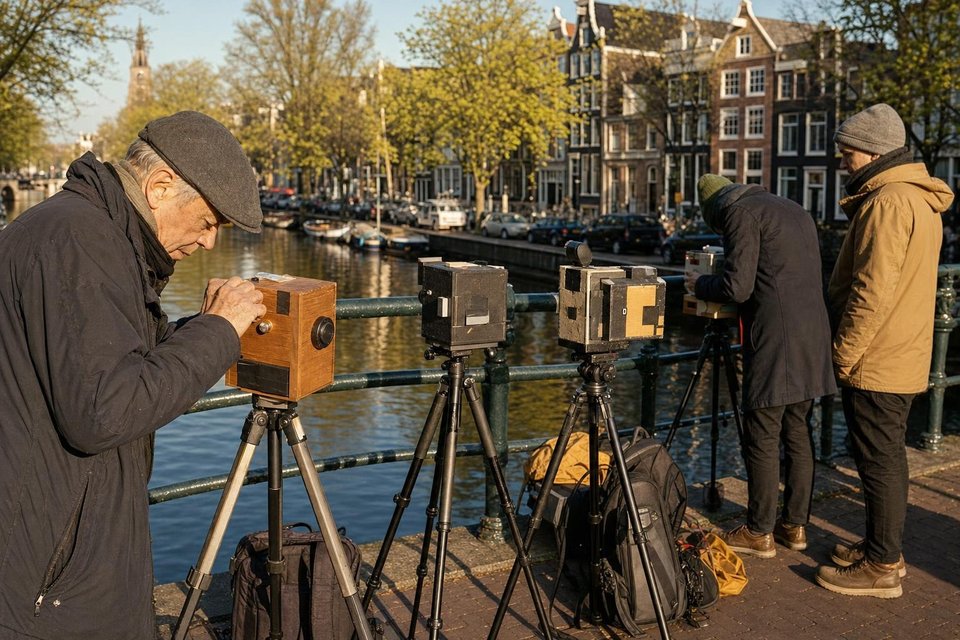
The 2014 edition fell on 27 April, which happened to collide with King’s Day in the Netherlands. When 27 April lands on a Sunday the national holiday moves to the Saturday, so the group of pinhole photographers who met in Amsterdam that weekend arrived in a city still recovering from a day and night of orange-clad street parties. The meeting had been planned online between photographers who mostly knew each other only through their pictures, and people travelled in from the United States, Spain, Ireland and Germany for a single day of shooting.
27 April 2014
A pinhole day through Amsterdam
Roughly eight hours on foot, in the rain for much of it.
AI
MorningDam SquareA ring of tripods goes up for the first exposures among the leftovers of King's Day.
AI
Late morningWaterloopleinCoffee, bagels and a long session of passing cameras round the table.
AI
AfternoonVondelparkHeavy rain, split into small groups, portraits held still under umbrellas.
AI
EveningA jenever bar and Dam Square againLast frames by a funfair running at full speed in the square.
The route wound through the old centre with stops wherever someone spotted a frame: canal bridges, a photography exhibition, a noodle bar at lunch. Wet weather did not stop anything, it just lengthened the exposures and made portraits in the Vondelpark a test of patience for the sitters. Cameras ranged from medium format wooden boxes loaded with colour negative film to panoramic 35 mm cameras with slide film, and at least one participant metered every scene with a small light meter clipped to a phone, a gadget covered in the first look at the Ondu and Lumu.
Group meetings like this have become a regular side of the event. Later editions brought similar meet-ups in other cities, Barcelona among them. Each participant’s picture still goes into the official gallery on its own, and the yearly archives can be browsed by country, which makes a meeting’s pictures easy to find again years later.
Organising a meet
A meeting needs very little: a start point that is easy to find, a loose walking route with places to sit, and a plan for rain. Long exposures make a group slow, so a route of a few kilometres is plenty for a whole day.
Ideas for the day
The one-image rule makes it worth thinking ahead, but not too much. Some of the best WPPD pictures are of ordinary things done slowly: a breakfast table, a commute, a garden shed.
Shoot the same view at dawn, noon and dusk and pick the best.
Leave a camera open for an hour on a busy street and see what remains.
Make a self-portrait with an exposure long enough to sit very still.
Build a new camera the evening before and give it its first roll.
Try a solargraph started on WPPD and opened months later.
Exposure is the usual worry for first-timers, and it is simpler than it looks. Meter at f/22, multiply by the square of the pinhole f-number divided by 22, then add a reciprocity correction for film. The pinhole camera guide walks through the arithmetic, and the Zero Image exposure guides give ready tables for common cameras.
What people shoot with
A look through any year’s gallery shows how wide the range of cameras is. Plenty of entries come from boxes made the night before out of cereal packets, coffee tins or drinks cans, often loaded with photographic paper and developed in a bathroom. Others come from wooden cameras by makers such as Zero Image in Hong Kong or Ondu in Slovenia, from plastic panoramic bodies, or from old folding cameras with the lens taken out and a pinhole fitted in its place.
Digital entries are welcome too, and a pinhole body cap on a mirrorless camera is the quickest way to see results on the day itself. The look is different from film, with more visible dust spots from the sensor and less of the gentle tonal roll-off of a negative, but the slow, soft character of a lensless picture comes through either way.
The best reason to take part is the gallery itself. Browsing a year’s submissions shows how differently people see through the same simple tool, and the makers section on this site looks at the cameras and processes that have shaped how pinhole pictures look today. One small habit helps a great deal on the day: write the exposure time on a scrap of paper after every frame. When the roll comes back weeks later, those notes are the only record of what the light was doing.
FAQ
Frequently Asked Questions
When is Worldwide Pinhole Day?
It falls on the last Sunday of April every year and has done since the first edition in 2001. In 2027 that is 25 April, in 2028 it is 30 April. The date stays the same everywhere in the world, so photographers in different time zones all shoot on their own Sunday and add their pictures to one shared online gallery afterwards.
Does the WPPD picture have to be made with film?
No. The only real requirement is that the picture is made without a lens, through a pinhole or a similar tiny aperture, on the day itself. Film, photographic paper, instant film and digital sensors behind a pinhole body cap are all accepted, and many participants use cameras they built themselves from boxes, cans or old camera bodies.
How many pictures can be submitted?
Each participant uploads a single image to the official gallery, chosen from everything made on the day. That one-picture rule is part of the character of the event: it pushes people to look carefully at their results and pick the frame that says most, rather than sending a whole roll. The upload window stays open for a while after the day, so slow film processing is not a problem.
Is a group needed to take part?
Not at all. Most participants shoot alone, close to home. Group events are simply a pleasant extra: a few people agree a meeting point, walk a route together and compare cameras. A group can announce its meeting beforehand so others nearby can join, but each person still submits their own single image to the gallery.
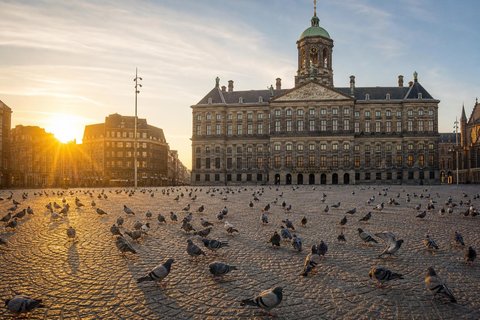 MorningDam SquareA ring of tripods goes up for the first exposures among the leftovers of King's Day.
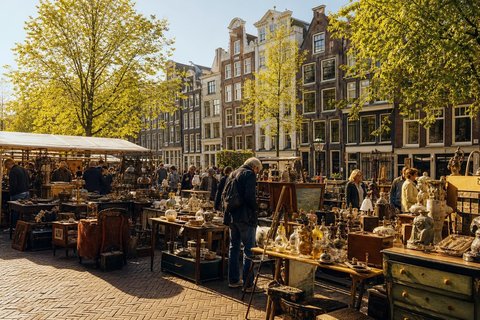 Late morningWaterloopleinCoffee, bagels and a long session of passing cameras round the table.
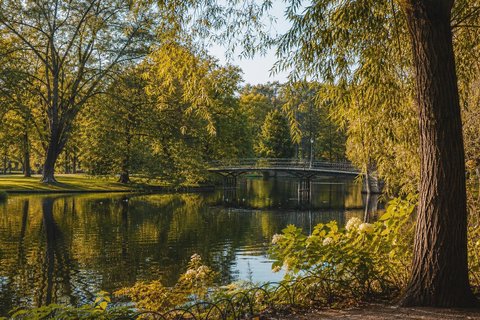 AfternoonVondelparkHeavy rain, split into small groups, portraits held still under umbrellas.
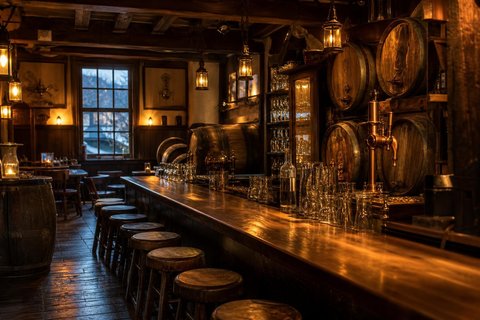 EveningA jenever bar and Dam Square againLast frames by a funfair running at full speed in the square.